
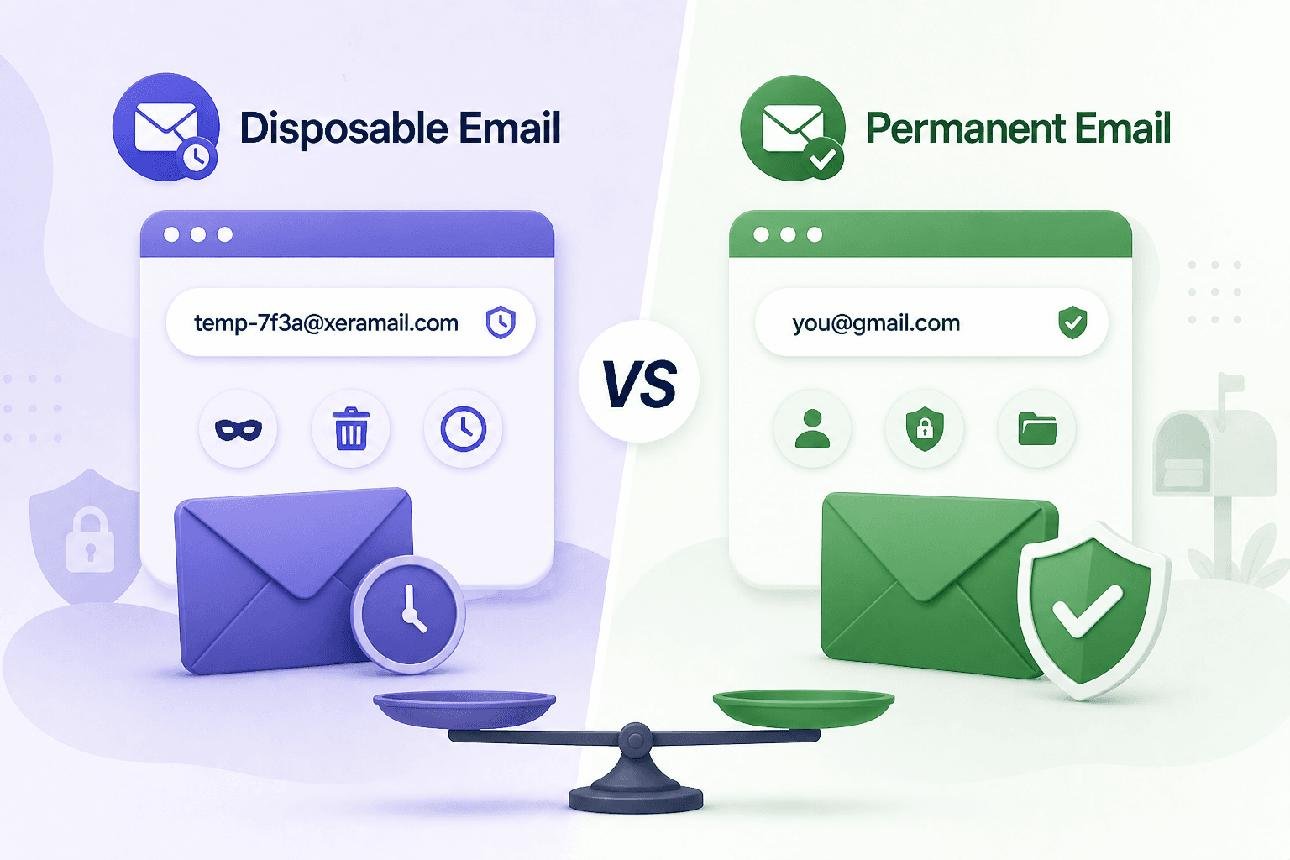

Introduction
Email has become an essential part of our digital lives. We use it for personal communication, online shopping, banking, social media, business, education, and countless other online activities. However, not every situation requires the same type of email address.
Two common options are temporary email and permanent email. While both allow you to send or receive messages, they serve different purposes. Understanding their differences can help you protect your privacy, improve security, and manage your inbox more efficiently.
In this guide, we’ll compare temporary and permanent email addresses, explain their advantages and disadvantages, and help you decide which option is best for different situations.
What Is a Temporary Email?
A temporary email (also called a disposable email) is a short-lived email address that can receive messages for a limited period.
Its main purpose is to:
- Receive verification emails
- Register for short-term services
- Protect your personal email
- Reduce spam
- Maintain online privacy
Most temporary email addresses expire automatically after a certain amount of time.
What Is a Permanent Email?
A permanent email is a long-term email account that remains active until you delete it.
People commonly use permanent email accounts for:
- Personal communication
- Business correspondence
- Online banking
- Social media accounts
- Online shopping
- Educational platforms
- Long-term subscriptions
Permanent email accounts also provide account recovery options, storage, and advanced security features.

Key Differences Between Temporary and Permanent Email
| Feature | Temporary Email | Permanent Email |
|---|---|---|
| Lifespan | Short-term | Long-term |
| Registration | Usually not required | Registration required |
| Privacy | High | Moderate |
| Spam Protection | Excellent | Depends on user management |
| Account Recovery | Usually unavailable | Available |
| Best For | Short-term registrations | Important accounts |
| Inbox Storage | Limited | Long-term |
Advantages of Temporary Email
Better Privacy
Temporary email helps keep your personal email address hidden from unknown websites.
Less Spam
Marketing emails, newsletters, and promotional messages remain separate from your main inbox.
Instant Access
Most temporary email services generate an email address instantly without requiring account creation.
Easy Testing
Developers and testers can quickly create multiple accounts for software or website testing.
Advantages of Permanent Email
Reliable Account Recovery
Permanent email allows users to recover passwords and regain access to important accounts.
Long-Term Communication
Personal, professional, and educational conversations remain available whenever needed.

Stronger Security Features
Many permanent email providers offer:
- Two-factor authentication
- Spam filters
- Encryption
- Login alerts
- Backup options
Cloud Integration
Permanent email accounts often work with calendars, cloud storage, contacts, and productivity tools.
When Should You Use Temporary Email?
Temporary email is ideal for:
- Website registrations
- Free trials
- Beta testing
- Online surveys
- Downloading free resources
- Forum registrations
- Testing applications
- Short-term online activities
When Should You Use Permanent Email?
Permanent email is the better choice for:
- Banking
- Government services
- Business communication
- Job applications
- Online shopping
- School and university accounts
- Healthcare portals
- Long-term subscriptions
Can You Use Both?
Yes. In fact, many internet users benefit from using both types of email.
A practical approach is:
- Use temporary email for one-time registrations, testing, and unfamiliar websites.
- Use permanent email for important accounts, trusted services, and long-term communication.
This combination helps improve privacy while ensuring reliable access to essential accounts.
Best Practices for Email Security
Whether you use temporary or permanent email, follow these security tips:
- Create strong, unique passwords.
- Enable two-factor authentication whenever available.
- Avoid clicking suspicious email links.
- Keep your recovery information updated.
- Use trusted websites and online services.
- Regularly review your online accounts.
Future of Email Privacy
As concerns about online privacy continue to grow, temporary email services are becoming increasingly popular. Future developments may include:
- AI-powered spam detection
- Better privacy controls
- Advanced email encryption
- Improved identity protection
- Smarter email management tools
These innovations will give users greater control over their digital communication.
Important limitations
Temporary email can reduce exposure of your primary inbox, but it is not a complete privacy or security solution. The service provider may still process messages and technical data, and the websites you visit can collect information such as IP addresses, cookies, or device details. Use temporary addresses for low-risk, short-term purposes and follow each website’s rules.
Conclusion
Both temporary and permanent email addresses have important roles in today’s digital world. Temporary email is an excellent choice for protecting privacy, avoiding spam, and handling short-term registrations. Permanent email, on the other hand, is essential for long-term communication, account recovery, and secure online services.
Choosing the right type of email for each situation helps improve security, reduce inbox clutter, and protect your digital identity.