

Introduction
Temporary email services have become increasingly popular among internet users who want to protect their privacy, reduce spam, and avoid sharing their personal email addresses with every website they visit. Whether you’re signing up for a free trial, testing a new app, or downloading an online resource, a temporary email can be a convenient solution.
However, one common question remains: Are temporary email services really safe?
The answer depends on how they are used. Temporary email services can improve your online privacy in many situations, but they also have limitations. In this guide, we’ll explore how temporary email works, its security benefits, potential risks, and best practices for using it safely.
What Is a Temporary Email Service?
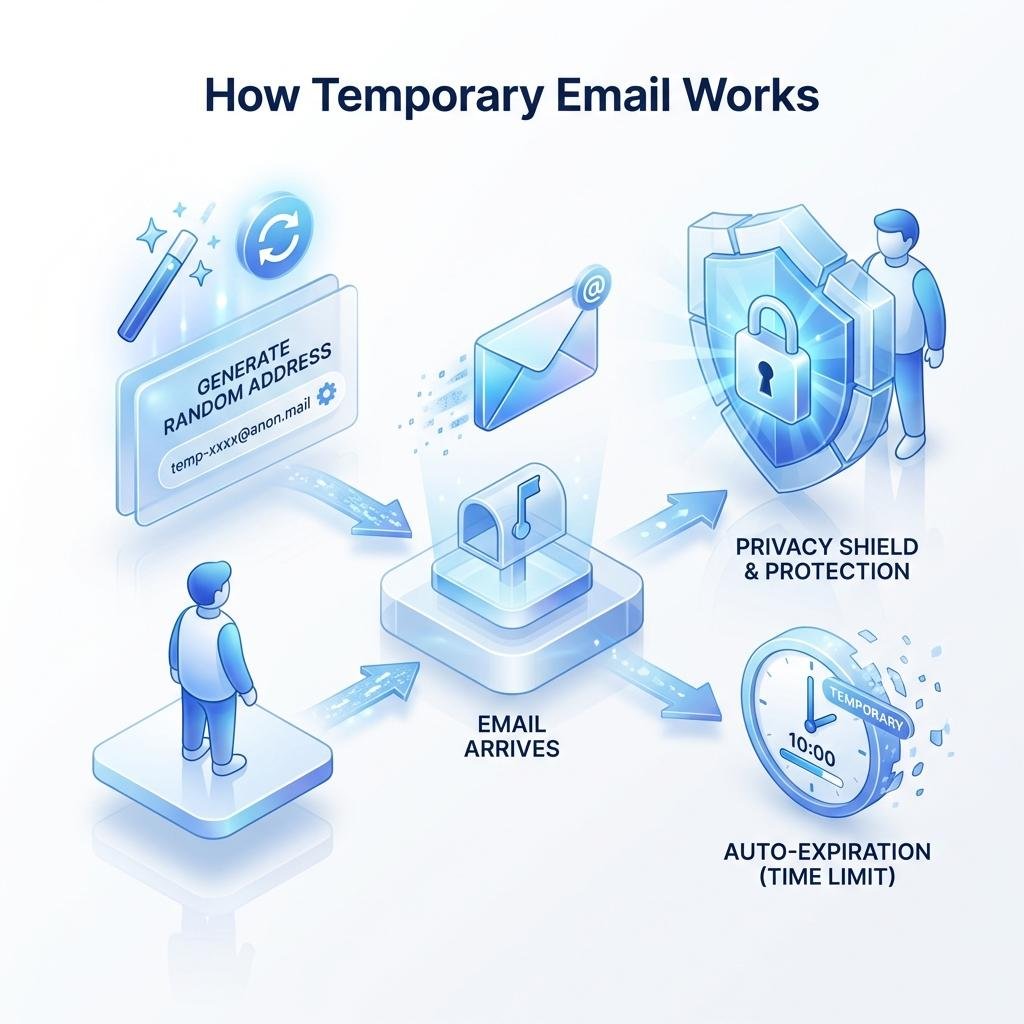
A temporary email service provides a disposable email address that users can create instantly without registering for a permanent account.
These email addresses are commonly used for:
- Website registrations
- Email verification
- Free trials
- Online surveys
- Beta testing
- App testing
- Forum registrations
Most temporary email addresses automatically expire after a certain period.
How Temporary Email Improves Security
1. Protects Your Personal Email Address
Using a temporary email prevents your primary email account from being shared with unknown websites.
This reduces the chance of:
- Spam
- Marketing emails
- Unwanted newsletters
- Data collection

2. Reduces Phishing Risks
Cybercriminals often target personal email addresses with phishing attacks.
By using a temporary email for unfamiliar websites, you reduce the exposure of your primary email account to potential phishing campaigns.
3. Helps Prevent Inbox Clutter
Temporary email keeps verification messages and promotional emails separate from your personal inbox.
This makes it easier to manage important emails.
Are Temporary Emails Completely Safe?
Temporary email services improve privacy, but they are not a complete cybersecurity solution.
Their safety depends on:
- The provider you use
- The type of website you register on
- The purpose of the email
- How long you need access to the account
Some temporary email services provide better privacy protections than others.
Potential Risks of Temporary Email
Public Inbox Access
Some disposable email services use publicly accessible inboxes.
If another person knows the email address, they may be able to view incoming messages.
Limited Account Recovery
Since temporary emails expire, you may lose access to:
- Password reset links
- Verification emails
- Account recovery messages
This makes them unsuitable for important long-term accounts.
Not Accepted Everywhere
Some websites detect and block disposable email domains to reduce spam or fake account creation.
In these cases, users must provide a permanent email address.
When Temporary Email Is Safe to Use
Temporary email is generally suitable for:
- Free trials
- Testing websites
- Downloading free resources
- Online surveys
- Beta testing
- App registrations
- Short-term projects
These situations usually do not require long-term account access.
When You Should Avoid Temporary Email
Do not use temporary email for:
- Banking services
- Government websites
- Healthcare portals
- Business accounts
- Online shopping accounts with purchases
- Job applications
- Educational portals
- Accounts requiring password recovery
These services require reliable long-term email access.

Best Practices for Safe Use
To maximize security while using temporary email:
Choose a Trusted Temporary Email Provider
Use well-known services with a good reputation for privacy and reliability.
Never Share Sensitive Information
Avoid using temporary email for accounts that store financial, personal, or confidential data.
Use Strong Passwords
If the website requires a password, create a strong and unique one.
Enable Two-Factor Authentication
For important accounts, always activate multi-factor authentication whenever available.
Read Privacy Policies
Understand how websites handle your personal information before registering.
Temporary Email vs Permanent Email Security
| Feature | Temporary Email | Permanent Email |
|---|---|---|
| Privacy | High | Moderate |
| Spam Protection | Excellent | Good |
| Long-Term Access | No | Yes |
| Password Recovery | Limited | Full Support |
| Best for Important Accounts | No | Yes |
Future of Temporary Email Security
As online privacy becomes increasingly important, temporary email services are expected to evolve with new security features, including:
- AI-powered spam detection
- Better encryption
- Enhanced privacy controls
- Improved identity protection
- Smarter inbox management
These advancements will make disposable email services even more secure and user-friendly.
Important limitations
Temporary email can reduce exposure of your primary inbox, but it is not a complete privacy or security solution. The service provider may still process messages and technical data, and the websites you visit can collect information such as IP addresses, cookies, or device details. Use temporary addresses for low-risk, short-term purposes and follow each website’s rules.
Conclusion
Temporary email services are generally safe when used for the right purposes. They provide excellent privacy, reduce spam, and protect your personal email address during short-term online activities.
However, they should not replace permanent email accounts for important services that require long-term access or account recovery. By understanding both the benefits and limitations of temporary email, you can use it wisely to enhance your online privacy and security.